Table Of Contents
A luxury bathroom renovation is defined by the quality of the substrate work and the finish, not the price of the tapware. The parts you never see, the waterproofing, the falls to the waste, the wall preparation, are what separate a genuinely high-end bathroom from an expensive one that looks wrong within two years.
This guide covers what actually makes a bathroom luxury, the materials and features worth the spend, how to achieve it in a smaller space, and what to sort out at the planning stage.
What Actually Makes a Bathroom "Luxury"
Luxury in a bathroom comes down to execution, not just expensive products. A high-end bathroom is one where the tiling is set out properly, the waterproofing is done right, and every junction and edge is resolved cleanly.
- Set-out and tile alignment. Tiles aligned to the room, grout lines that run true, cuts landing in sensible places rather than awkward slivers at the edges
- Substrate and waterproofing. The work behind the tiles, done to standard, since this is what determines whether the bathroom still looks good in five years
- Continuity of finish. Consistent tiling across floor and walls, matched tapware finishes, and hardware that belongs to the same design language
- Detail resolution. Clean silicone lines, tidy penetrations around tapware, niches that align with tile courses rather than cutting across them
- Lighting. Layered lighting rather than a single ceiling fixture, including task lighting at the vanity
Get these right and a moderate materials budget reads as high end. Get them wrong and premium tapware won't save it.
Materials and Finishes Worth the Investment
Materials do the visible work, and a few choices carry more weight than others. These are the ones that tend to make the most difference to how a bathroom reads.
- Large-format tiles. Fewer grout lines across floor and walls, which makes a space feel calmer and larger, though they demand a properly level substrate to sit flat
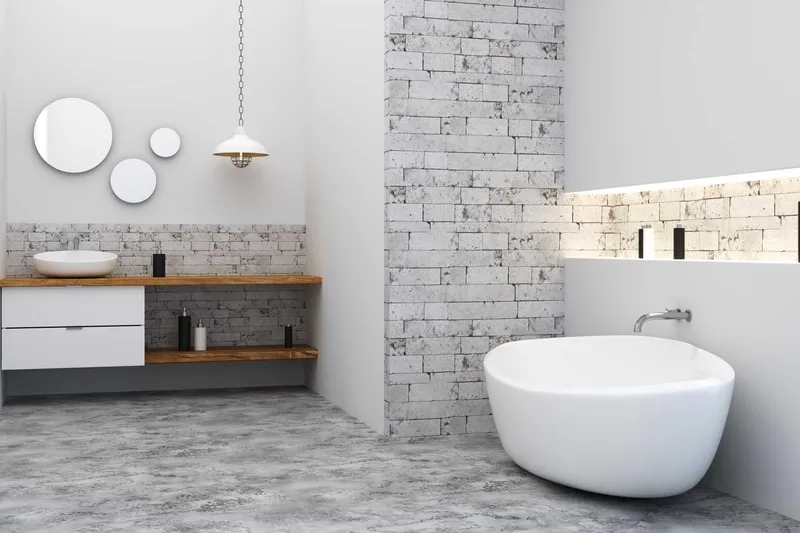
- Natural stone. Marble, travertine and limestone for vanity tops or feature walls. Worth knowing these need sealing and ongoing care, which suits some households and not others
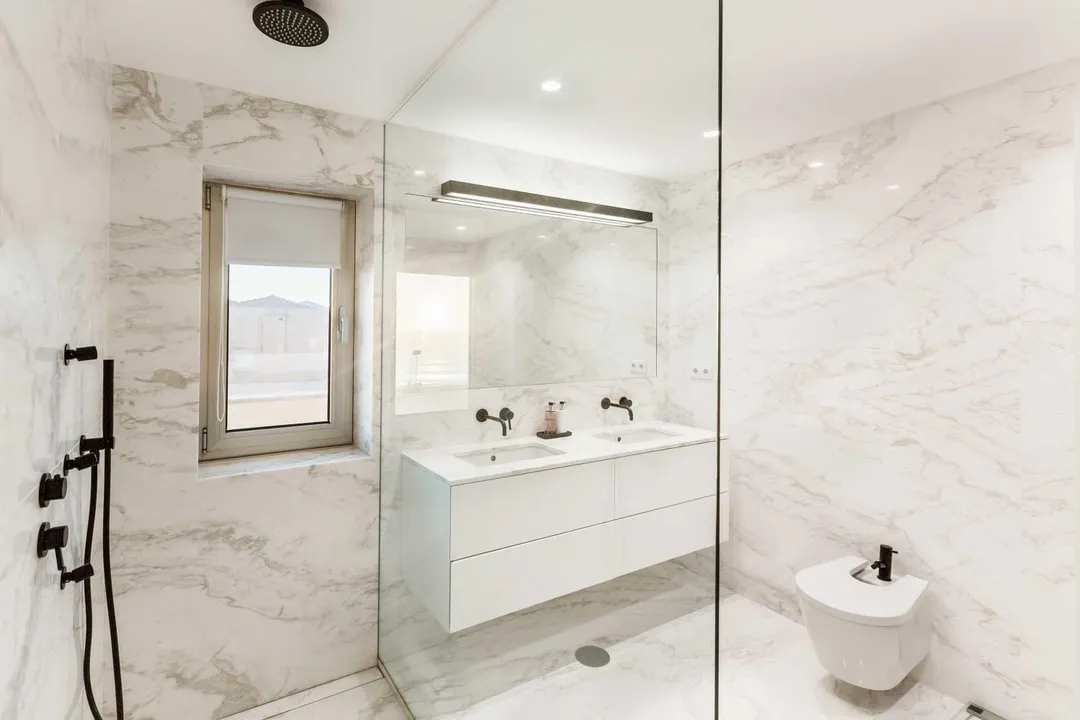
- Porcelain slab. Stone-look surfaces with less maintenance, used for vanity tops, feature walls and shower niches
- Solid surface or engineered stone benchtops. Seamless joins and consistent colour across the vanity top
- Tapware finishes. Matte black, brushed brass, gunmetal and brushed nickel, alongside chrome. Whichever you pick, carry it consistently across tapware, shower fittings, towel rails and door hardware
- Frameless glass. A frameless shower screen keeps sightlines open and is a common marker of a high-end bathroom
Luxury Features to Consider
Certain features come up repeatedly in high-end bathrooms because they change how the room is used, not just how it looks.
- Underfloor heating. Electric in-slab or under-tile heating, most appreciated in winter. Needs to be planned before tiling, since it can't be added later without lifting the floor
- Freestanding bath. A design centrepiece, though it needs the floor area and the plumbing set out for it from the start
- Feature tiling. A single feature wall, a tiled niche, or a contrasting floor, used deliberately rather than everywhere at once
- Wall-hung vanity. Floor visible beneath it, which makes a smaller room feel larger and simplifies cleaning
- Rainfall shower head. Often paired with a handheld on a rail, which needs adequate ceiling height and water pressure
- Concealed cisterns and in-wall mixers. Fewer visible fixtures, cleaner wall planes, with access panels planned in advance
- Heated towel rails and demister mirrors. Small additions that need electrical rough-in before the walls close up
Most of these are decided before any tile goes down. Adding them later means undoing finished work.
Luxury on a Smaller Footprint
A small bathroom can absolutely read as luxury, and in some ways it's easier, since there's less area to finish to a high standard. The approach shifts from adding features to making the space feel considered and uncluttered.
- Large-format tiles. Counter-intuitive but effective, fewer grout lines make a small room feel larger
- Wall-hung vanity and toilet. Visible floor underneath creates a sense of space
- Frameless screen over a shower curtain or framed screen. Keeps the sightline through the room unbroken
- One feature, done well. A single feature wall or a stone vanity top, rather than several competing elements
- Recessed niches. Storage without protruding shelving taking up room
- Consistent finishes. Fewer materials and one tapware finish throughout, which reads as deliberate rather than busy
For a small bathroom renovation, restraint usually delivers a better result than trying to fit in everything from a larger design.
Planning and Design Before Work Starts
Most of the decisions that determine the final result are made before demolition, not during. Getting the design and specification settled early is what keeps a project on track.
- Confirm the layout first. Moving the toilet, shower or vanity means relocating plumbing, which affects cost and programme more than any material choice
- Select materials before starting. Tiles, stone and specialty fittings can carry long lead times, and a delayed selection holds up the whole job
- Plan the services. Underfloor heating, heated towel rails, demister mirrors and additional lighting all need electrical rough-in before the walls are closed
- Set out the tiling. Where cuts land, how niches align with tile courses, and where feature tiling starts and stops
- Check approvals and compliance. Waterproofing must meet the relevant Australian Standard, and structural or plumbing changes may require permits
- Coordinate the trades. Plumbing, electrical, waterproofing, tiling and glazing all have to run in the right order
McMullen Trades is a licensed builder (BLD 291825) with plumbers, electricians and tilers in the same group, which means the sequencing is managed in-house rather than across separate contractors.
FAQs
What features define a luxury bathroom renovation?
Quality of execution first: proper waterproofing, correct falls, and tiling set out so cuts and grout lines land well. Beyond that, features like underfloor heating, a freestanding bath, frameless glass, a wall-hung vanity, concealed cisterns and layered lighting are common markers.
Can a small bathroom still feel luxurious?
Yes. Large-format tiles, a wall-hung vanity, a frameless screen and recessed niches all make a small bathroom feel larger and more considered. The approach is restraint, fewer materials and one feature done properly, rather than fitting in everything from a larger design.
How long does a luxury bathroom renovation typically take?
Longer than a standard renovation, because more trades are involved and the finishing work takes more time. Material lead times often add to it, particularly for stone or specialty fittings, so selections made early help. We'll give you a realistic programme once the scope is confirmed.
What should I budget for in a high-end bathroom renovation?
It depends on the size of the room, whether the layout changes, and the materials and features you choose. Moving plumbing, underfloor heating and stone surfaces all add to it. Rather than working from a general figure, it's worth getting a quote on your actual bathroom and scope.
Talk to Us About Your Luxury Bathroom Renovation
If you're planning a high-end bathroom, the earlier the design and specification are settled, the better the result. Normco handles bathroom renovations across Whyalla with plumbing, electrical, tiling and glazing coordinated in-house. Call (08) 8645 9211 to book a consultation.
McMullen Trades