Table Of Contents
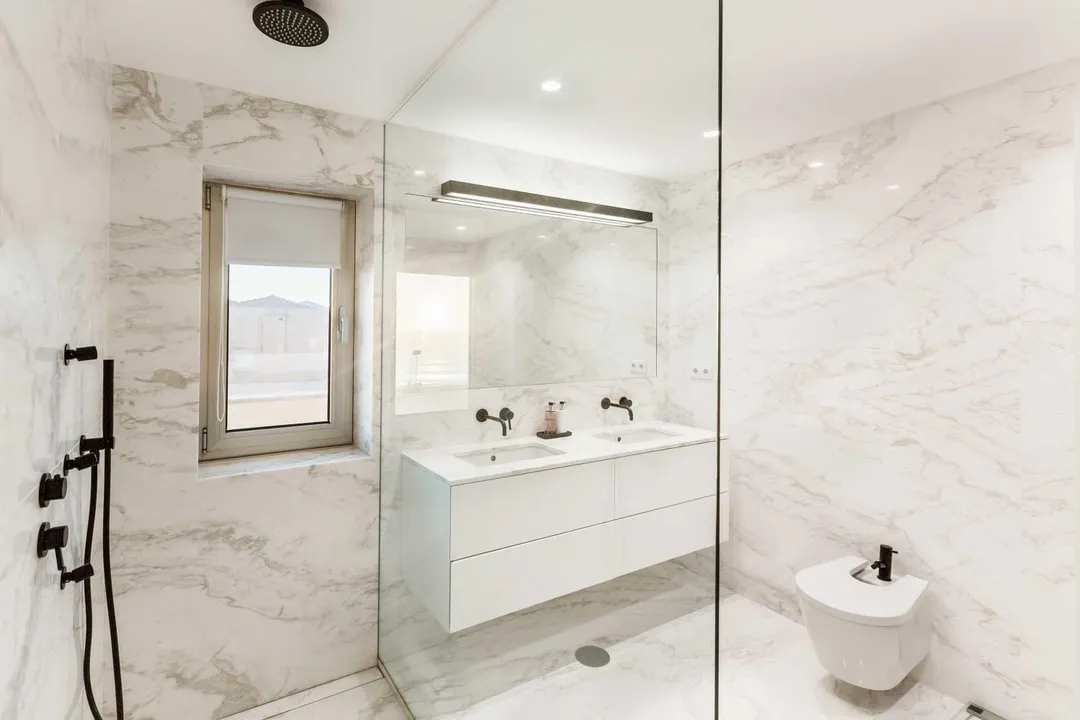
The difference comes down to how much metal framing holds the glass. A frameless shower screen uses no perimeter frame, relying on thicker toughened glass, brackets and hinges. A semi-frameless screen keeps framing on some edges, usually the fixed panel or the outer edges, while leaving the door and visible edges frame-free.
This guide compares the two on cost, cleaning, durability, water containment and look, so you can pick the one that suits your bathroom rather than the one that photographs best.
What's Actually Different Between the Two
The only real difference is the amount of framing, and that one decision flows through to everything else: glass thickness, price, cleaning and how the screen handles water.
- Frameless. No perimeter frame. Thicker toughened glass, typically 10mm or 12mm, held by brackets, hinges and channel at the base or wall fixing points
- Semi-frameless. Framing retained on selected edges, commonly the fixed panel and outer edges, with the door edge left unframed. Glass is usually thinner, around 6mm to 8mm, since the frame carries more of the load
- Shared basics. Both use toughened safety glass, both are made to measure for the opening, and both are available in a range of finishes for the visible hardware
Any glass shower screen also needs the same things behind it to work properly: level walls, correct falls to the waste, and sound waterproofing. The screen type doesn't change that.
Cost Comparison
Frameless screens cost more than semi-frameless, generally by a meaningful margin rather than a small premium. The gap comes from the materials and the work involved, not from the finish alone.
- Glass thickness. Frameless needs thicker toughened glass to stay rigid without a frame, and thicker glass costs more per square metre
- Hardware. Frameless relies on heavier-duty brackets and hinges rated to carry the panel weight
- Installation. Frameless demands tighter tolerances, since there's no frame to conceal a wall that's out of square, so measuring and fitting take longer
- Semi-frameless. Thinner glass, lighter hardware and framing that absorbs minor wall variation, all of which brings the cost down
As a general picture, semi-frameless sits in the mid range and frameless at the upper end, with the size of the opening and the glass specification moving both. Exact pricing depends on your bathroom, so it's worth getting both quoted side by side rather than working from a general figure.
Cleaning and Maintenance
Frameless is easier to clean, because there's less framing for soap scum and mould to collect in. Semi-frameless isn't difficult, but the framed edges give grime somewhere to sit.
- Frameless. Fewer channels and edges, so most of the cleaning is the glass itself. A squeegee after each shower keeps water marks down
- Semi-frameless. The framed sections need attention, particularly the bottom channel, where water and residue sit. Not a large job, but a recurring one
- Both. Silicone seals need checking for mould over time, and hard water leaves marks on any glass screen if it isn't wiped down
- Glass treatment. A protective glass coating can be applied to either type, which reduces water marking and makes cleaning easier
If low-effort cleaning is the priority, frameless has the edge. If you're realistic about wiping down a channel now and then, the difference is smaller than it's sometimes made out to be.
Durability and Water Containment
Both perform well when installed correctly, but they get there differently. Frameless uses thicker glass for rigidity, while semi-frameless uses framing to support thinner glass and guide water back into the shower.
- Glass strength. Both use toughened safety glass. Frameless glass is thicker, semi-frameless is thinner but supported by framing, so neither is fragile in normal use
- Water containment. Semi-frameless framing helps direct water back into the shower, and the framed edges reduce the chance of seepage at panel junctions
- Frameless containment. Depends more on the design, the door swing and the seals. A well-designed frameless screen contains water fine, a poorly planned one can let water escape at the door
- Installation quality. More decisive than screen type for both. Correct falls to the waste, level fixing and properly applied seals matter more than which type you choose
Neither type is inherently better at keeping water in. What matters is that the screen is designed for the shower's layout and installed to suit it.
Which One Suits Your Bathroom
The practical answer comes down to budget, bathroom size and how much cleaning you want to do.
Frameless suits you if:
- You want the most open, uninterrupted look, particularly in a small bathroom where visual space matters
- You want the least framing to clean around
- The budget allows for the higher spend
- You're renovating to sell or to a higher finish level
Semi-frameless suits you if:
- You want a clean modern look without the frameless price
- Water containment is a priority, for example in a compact shower or a wet-room-style layout
- The walls aren't perfectly square, since framing absorbs minor variation
- You want a good result with more of the budget left for tiling or fittings
There's also a middle path worth knowing about. Beyond these two, fully framed screens remain the most affordable option, and among shower screen styles you can also choose between pivot, sliding and fixed panel configurations in either frameless or semi-frameless.
FAQs
Is a frameless shower screen more expensive than semi-frameless?
Yes, generally by a meaningful margin. Frameless needs thicker toughened glass and heavier-duty hardware, and installation takes longer because there's no frame to conceal variation in the walls. Semi-frameless uses thinner glass and framing that absorbs minor wall movement, which brings the cost down.
Which is easier to clean, frameless or semi-frameless?
Frameless, since there's less framing for soap scum and mould to collect in. Semi-frameless needs the framed sections and bottom channel cleaned regularly. A protective glass coating helps with either type.
Does a semi-frameless screen contain water as well as a frameless one?
Often slightly better, because the framing helps direct water back into the shower and reduces seepage at panel junctions. A well-designed frameless screen contains water fine, but it depends more on the layout, door swing and seals.
Which option adds more value to a bathroom renovation?
Frameless is typically seen as the higher-end finish and tends to present better, particularly in a smaller bathroom where the open look makes the space feel larger. That said, a well-installed semi-frameless screen in a well-finished bathroom presents far better than a frameless screen fitted poorly.
Get a Quote for Your Shower Screen
If you're weighing up both options, we can quote them side by side for your actual bathroom, so you're comparing real numbers rather than general ranges. Normco supplies and installs shower screens across Whyalla, measured to fit. For more on what the install itself involves, see our guide to shower screen installation, or contact Normco to talk through which suits your space.
McMullen Trades